- Healthcare Technology
- Tips & Guides
Understanding Lab Results: A Patient's Guide
Lab results can be confusing with all those numbers and abbreviations. Here's how to understand what your results actually mean.

Medically reviewed by
Board-Certified Clinical Informatics Physician
Updated on October 05, 2024

Making Sense of Your Lab Results
Getting lab results can be stressful, especially when you don’t understand what all those numbers mean. While your doctor should always explain significant findings, understanding the basics can help you be a more informed patient.
Common Lab Test Categories
Complete Blood Count (CBC)
- WBC (White Blood Cells) - Infection and immune function
- RBC (Red Blood Cells) - Oxygen-carrying capacity
- Hemoglobin - Oxygen in your blood
- Platelets - Blood clotting ability
Basic Metabolic Panel (BMP)
- Glucose - Blood sugar levels
- BUN/Creatinine - Kidney function
- Electrolytes - Sodium, potassium, chloride balance
Lipid Panel
- Total Cholesterol - Overall cholesterol level
- LDL - “Bad” cholesterol
- HDL - “Good” cholesterol
- Triglycerides - Fat in your blood
Understanding Reference Ranges
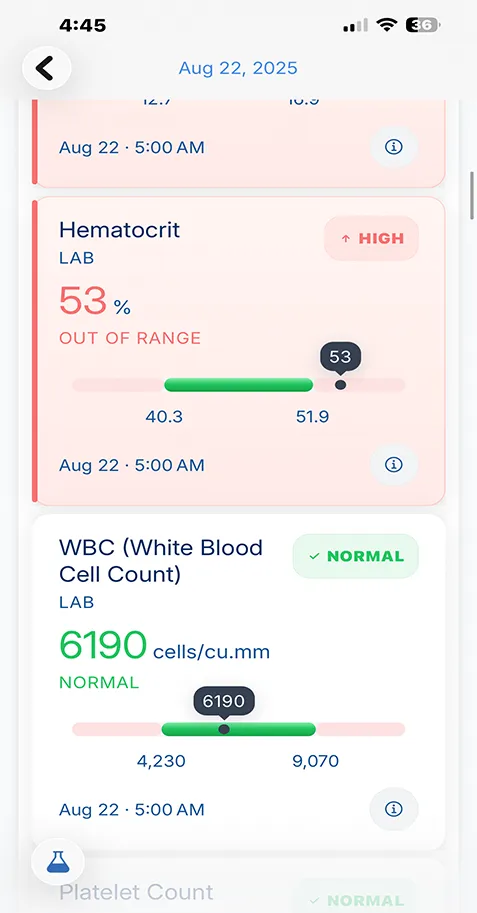
Lab results include reference ranges (sometimes called “normal” ranges):
- Results within range are typically considered normal
- Ranges can vary by lab, age, and sex
- Slightly out-of-range results aren’t always concerning
- Trends over time matter more than single results
Red Flags vs. Normal Variations
Don’t panic about:
- Minor variations just outside the reference range
- Results that haven’t changed from previous tests
- Values that your doctor says are fine for you
Do follow up on:
- Significantly abnormal results
- New abnormalities that weren’t present before
- Results your doctor flags for follow-up
- Patterns of worsening values over time
Tracking Your Results Over Time
This is where digital health records shine. With VertexMD:
- Store all your lab results in one place
- View trends and changes over time
- Use AI to ask questions about your results
- Share historical data easily with new providers
Questions to Ask Your Doctor
When reviewing results, ask:
- What does this specific result mean for my health?
- Is this result significantly different from before?
- Do I need any follow-up tests or treatments?
- What lifestyle changes might help improve this result?
Important Disclaimer
Remember: Lab results are just one piece of the puzzle. Always discuss your results with a qualified healthcare provider who knows your complete medical history. VertexMD helps you organize and understand your data, but it doesn’t replace medical advice.
About the reviewer

Dr. Sarah Chen, MD, MPH
Board-Certified Clinical Informatics Physician
Dr. Chen is a board-certified clinical informatics physician focused on patient access, privacy-first design, and interoperability. She reviews VertexMD content for clinical accuracy and translates standards like FHIR and HIPAA into practical guidance for tracking medical records across providers and devices.
- Clinical informatics
- Patient access & HIPAA rights
- Health data privacy
- FHIR & interoperability
- Personal health records
Your Records. One App. Total Control.
Stop chasing down files across hospital portals. VertexMD keeps your health history complete, searchable, and always private.
5K+



Trusted by families
worldwide